DBX Professional Audio at Studio Gears
DBX has earned its reputation rack space by rack space — built on decades of signal-processing tools that home-studio owners, mix engineers, and live-sound professionals trust to keep their audio clean, controlled, and ready to record. At Studio Gears, the DBX lineup covers everything from graphic EQs and crossovers to personal monitor solutions, giving you the processing foundation that serious sessions demand.
With 23 DBX units in stock spanning a wide range of price points, there's a processor here whether you're tightening up a tracking room, dialing in a two-way monitor system, or shaping a mix for mastering. DBX gear is built to work quietly and reliably in the signal chain — so what you capture is what you intended.
The DBX Story: A Legacy Built on Signal Integrity
DBX became one of the most recognized names in professional audio largely on the strength of its noise-reduction systems, which changed the standard for what a clean signal path could sound like in both studio and broadcast environments. That commitment to preserving signal integrity — reducing noise without compromising dynamics — became the philosophical backbone of everything the brand developed afterward, from dynamic processors to the equalizers and crossovers the brand is known for today.
Over the years, DBX expanded its focus to include a full range of rack-mount signal processors that became fixtures in professional studios, touring rigs, and installed sound systems worldwide. The dual-channel graphic EQs, in particular, became industry standards for tuning monitor systems and room correction — tools that producers and engineers reach for not because they are fashionable, but because they simply work.
What DBX Is Known For
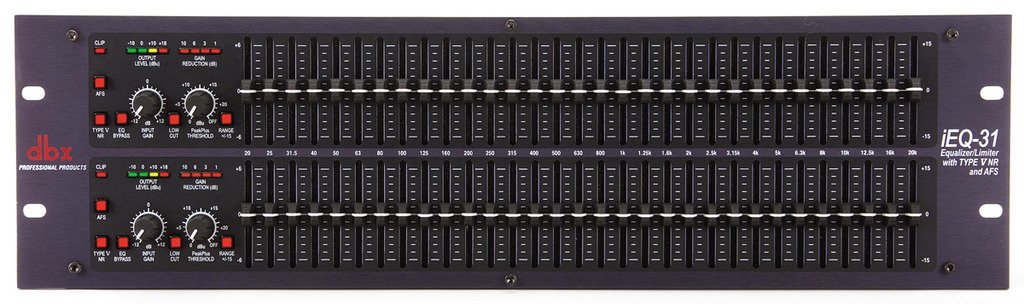
- Rack-mount graphic equalizers trusted for monitor tuning, room correction, and mix shaping — including 15-band and 31-band dual-channel configurations
- Stereo and mono crossovers that give engineers precise control over multi-way speaker systems in both studio and live-sound environments
- Personal monitor mixing solutions that put individual mix control directly in the hands of performers and tracking engineers
- Balanced XLR and TRS connectivity throughout the product line for professional, noise-resistant signal routing
- A reputation for clean, transparent processing that stays out of the way of the audio rather than coloring it
- Versatility across studio recording, live performance, acoustic measurement, and mastering applications
Frequently Asked Questions
What types of products does DBX make?
DBX specializes in professional signal processing equipment — primarily graphic equalizers, crossovers, and personal monitor mixing solutions. These are rack-mount tools designed for studios, live sound systems, and installed audio environments. DBX does not make microphones or instruments; their focus is on shaping, controlling, and routing audio signals once they're in the chain.
How do DBX graphic EQs hold up in a studio recording environment?
DBX graphic EQs are widely used for monitor system tuning, room correction, and mix bus shaping. The 15-band and 31-band dual-channel models give engineers fine-grained frequency control with balanced I/O, making them practical for both tracking rooms and mastering setups. Their transparent character means they correct problems without introducing unwanted coloration.
What's the difference between the DBX 223xs, 234s, and 234xs crossovers?
All three are analog crossovers for dividing audio into frequency bands for multi-way speaker systems, but they differ in channel configuration and connector type. The 223xs handles stereo two-way or mono three-way splitting with XLR connectors. The 234s and 234xs both handle stereo two/three-way or mono four-way configurations, with the 234xs adding XLR connectivity for installations and rigs that require fully balanced, locking connections throughout.
Who are DBX products best suited for?
DBX gear is designed for working audio professionals and serious home-studio builders who need reliable, clean signal processing. Mix engineers use DBX EQs for room and monitor calibration. Studio operators use crossovers to manage bi-amp and tri-amp speaker setups. Performers and tracking engineers benefit from the PMC16 personal monitor system for independent headphone mixes. Essentially, anyone building or maintaining a controlled listening and recording environment will find relevant tools in the DBX lineup.
Does DBX equipment work well in a home studio, or is it designed only for large professional installations?
DBX products are scaled for both environments. The build quality and balanced I/O specs meet professional standards, but the units are practical in smaller home-studio racks as well. A dual-channel 31-band EQ, for instance, is just as useful for tuning a pair of studio monitors in a treated home room as it is in a large venue system. The price range available at Studio Gears reflects that DBX offers entry points accessible to home-studio owners alongside more advanced configurations.