
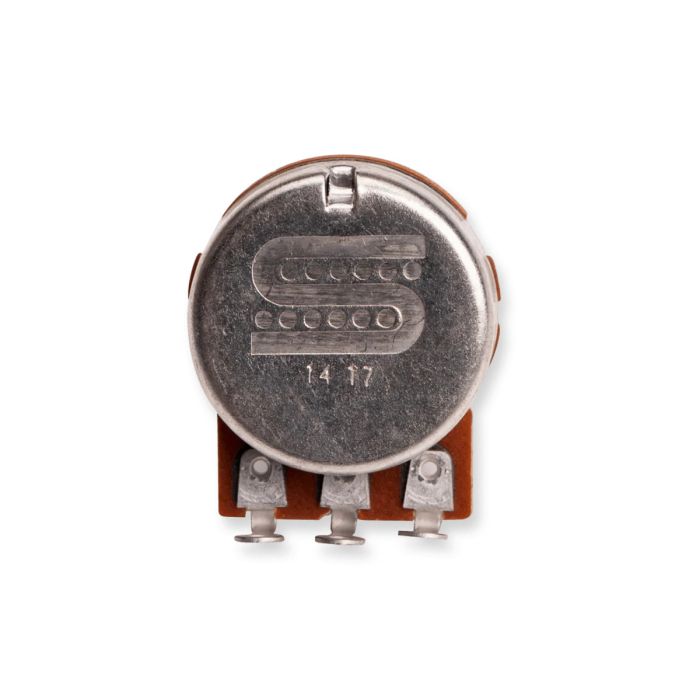
Seymour Duncan SDP-250, 250K Pot, SD logo
 Share
Share
- Brand new in original box
- Full Seymour Duncan manufacturer's warranty
- Free shipping in the continental US
In stock
- SKU
- 11807-60-250
Description
Seymour Duncan SDP-250 250K Potentiometer with SD Logo
The Seymour Duncan SDP-250 is a smooth-operating audio taper potentiometer engineered for reliable volume and tone control in electric guitars and basses. This 250 kOhm pot delivers consistent resistance and feel across its full sweep, making it an essential replacement or upgrade for recording and session work where instrument electronics must track predictably through tracking and mixing phases.
Electrical Specifications
Built to 250 kOhms resistance with audio taper characteristics, this pot provides the smooth, gradual response needed for capture-ready volume and tone shaping. Audio taper design ensures that the taper curve matches human hearing perception, delivering natural feel across the control's range—critical for consistency across multiple takes and overdubs.
Construction & Design
Custom-crafted by Bourns to Seymour Duncan's exacting specifications, the SDP-250 features a grooved shaft for secure knob fitment and includes mounting hardware for straightforward installation. The pot is a standard single-unit potentiometer—not a tandem, push/push, or solderless design—ensuring compatibility with most guitar wiring schemes.
Key Features
- 250 kOhm resistance value
- Audio taper for smooth, natural response
- Grooved shaft design for positive knob engagement
- Custom-crafted by Bourns to Seymour Duncan specifications
- Standard single-unit potentiometer configuration
- Mounting hardware included
- SD logo identification
- Reliable performance in volume and tone circuits
This Seymour Duncan potentiometer maintains the consistent, quality performance that studio work demands—keeping tone circuits responsive and predictable through extended recording sessions.
More Information
| Condition | New |
|---|
Reviews
At a Glance
The Seymour Duncan SDP-250 is a 250K audio-taper potentiometer engineered for clean, predictable volume and tone control in studio recording and production work. It pairs well with any guitar or bass tracking setup where precise, repeatable control matters across multiple takes and mix sessions. Its natural response curve and solid construction make it a straightforward upgrade for players who want their electronics to disappear into the signal chain.
Who This Is For
Great for
- ✓ Guitar Electronics Upgrade
- ✓ Bass Electronics Upgrade
- ✓ Studio Sessions
- ✓ Gigging
Skill level: Beginner · Intermediate · Advanced · Professional
Frequently Asked Questions
What is the difference between this 250K pot and other resistance values?
250K pots are typically paired with single-coil pickups for a brighter, more articulate response, while 500K pots suit humbuckers. The SDP-250 delivers smooth, gradual control feel with audio-taper design that matches human hearing, making it ideal for both volume and tone circuits.
Will this pot fit my guitar without modification?
The SDP-250 is a standard single-unit potentiometer with a grooved shaft and includes mounting hardware, so it fits most common guitar wiring schemes. However, confirm your current pot's configuration and mounting style before ordering.
What does audio taper mean, and why does it matter?
Audio taper means the resistance curve is shaped to match how human ears perceive volume changes, so you get smooth, natural-feeling control across the entire sweep instead of sudden jumps. This makes volume and tone adjustments feel responsive and musical at any setting.
Is this a single potentiometer or a stacked tandem design?
The SDP-250 is a standard single-unit potentiometer, not a tandem or push/push design. This ensures broad compatibility with most guitar and bass wiring configurations.
What skill level is required to install this pot?
Soldering and basic wiring knowledge are required. The pot itself is straightforward to mount thanks to the grooved shaft and included hardware, but installation should be done by someone comfortable with guitar electronics work or by a professional technician.
Do I pay sales tax on this order?
We collect sales tax only on orders shipped to California. Orders shipped to any other US state are charged $0 sales tax at checkout when you buy direct from our website. Marketplaces such as eBay, Reverb and Amazon collect sales tax in nearly every state as marketplace facilitators no matter who the seller is, so the same item at the same price costs less bought direct. Free US shipping and 30-day returns are included. Some states ask buyers to self-report use tax on out-of-state purchases.
Compare With
Similar Gear
Complete the Rig
Gear that pairs well with this.
✨ For You
Based on what you've been looking at.