
Seymour Duncan NYC Bass bridge 4 Strg Pickup
 Share
Share
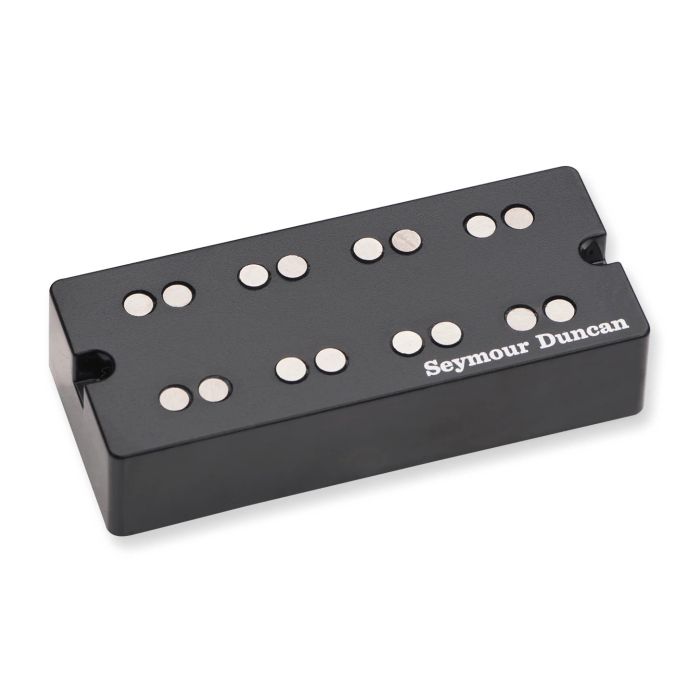
- Brand new in original box
- Full Seymour Duncan manufacturer's warranty
- Free shipping in the continental US
Out of stock
- SKU
- 11405-54
Description
Seymour Duncan NYC Bass Bridge 4-String Pickup
The Seymour Duncan NYC Bass Bridge Pickup delivers articulate, punchy midrange response with the clarity needed for defined note separation in your recordings. Hand-built in Santa Barbara, this passive dual-coil design sits comfortably in the bridge position of a standard DC 40 rout, offering the tonal character that translates across tight rock tracking sessions and intricate jazz overdubs alike.
Tonal Character & Studio Performance
Voiced with a prominent midrange peak at 2.4 kHz, this pickup emphasizes cut and articulation without sacrificing low-end presence. The EQ balance of 9/8/5 (Bass/Mid/Treble) pushes definition forward, making this bridge unit ideal for capturing note attacks that cut through a dense mix during mixing and arrangement work.
Design & Construction
Built with Alnico 2 magnets and a double row of exposed pole-pieces, the pickup uses four-conductor cabling for wiring flexibility in your rig. The compact 3.5" × 1.5" footprint fits standard installations, while the measured 2.319" string spacing (E to G center-to-center) ensures balanced response across all four strings during tracking.
Key Features
- Passive EMG 35 Size dual-coil configuration with exposed Alnico pole-pieces
- Alnico 2 magnet construction
- Bridge pickup DC resistance: 21.43 kΩ
- Resonant peak at 2.4 kHz for enhanced midrange articulation
- EQ voicing: 9 Bass / 8 Midrange / 5 Treble
- Four-conductor cabling for coil-splitting and series/parallel wiring options
- Dimensions: 3.5" [88.9mm] Long × 1.5" [38.1mm] Wide
- String spacing: 2.319" (58.90mm) center-to-center, E to G
- Fits standard DC 40 routing specification
- Hand-built in Santa Barbara, California
This is a serious bridge pickup for recording and producing bass tracks that demand clarity, punch, and the proven reliability of Seymour Duncan's manufacturing standards.
More Information
| Condition | New |
|---|
Reviews
At a Glance
The Seymour Duncan NYC Bass Bridge Pickup brings studio-grade articulation and clarity to recording sessions, with a voiced midrange peak at 2.4 kHz that sits forward in a mix without losing low-end presence. Hand-built with Alnico 2 magnets and a passive dual-coil design, it excels at capturing defined note separation and punch—critical for jazz, funk, and rock recordings where bass needs to cut without muddiness. Four-conductor cabling gives engineers flexibility in session setup and tone-shaping.
Who This Is For
Great for
- ✓ Jazz
- ✓ Funk
- ✓ Rock
- ✓ Studio Sessions
- ✓ Live Performance
Not the best pick for
- – Folk
- – Country
Skill level: Intermediate · Advanced · Professional
Frequently Asked Questions
What does 'DC 40 routing' mean, and will this pickup fit my bass?
DC 40 routing is a standard cavity specification found in most modern bass bodies. The NYC Bridge pickup's compact 3.5" × 1.5" footprint fits this standard routing, so it will work in any bass designed for that cavity. Check your bass manual or measure your existing bridge pickup cavity to confirm compatibility.
What genres and playing styles is this pickup best suited for?
This pickup excels in jazz, funk, rock, and studio sessions where articulation and midrange clarity matter. Its voiced EQ (9 Bass / 8 Midrange / 5 Treble) pushes definition forward, making it ideal for tight pocket playing and busy harmonic contexts. It is not recommended for folk or country styles that prioritize warm, organic low-end character.
How does the four-conductor cabling benefit me?
Four-conductor cabling opens wiring flexibility for coil-splitting and series/parallel configurations, giving you tonal options beyond standard dual-coil operation. This allows experienced players and techs to dial in different voicings and output levels depending on session or live-rig needs.
What skill level do I need to install this pickup?
Installation requires intermediate to advanced skills—soldering, cavity routing verification, and wiring knowledge are expected. Professionals and experienced DIY players comfortable with electronics and bass setups should proceed; beginners may want tech support from a qualified luthier or tech.
Do I pay sales tax on this order?
We collect sales tax only on orders shipped to California. Orders shipped to any other US state are charged $0 sales tax at checkout when you buy direct from our website. Marketplaces such as eBay, Reverb and Amazon collect sales tax in nearly every state as marketplace facilitators no matter who the seller is, so the same item at the same price costs less bought direct. Free US shipping and 30-day returns are included. Some states ask buyers to self-report use tax on out-of-state purchases.
Compare With
Similar Gear
Complete the Rig
Gear that pairs well with this.
✨ For You
Based on what you've been looking at.